24 Hour Towing Answering: Managing 2 A.M. Night Calls
· Digital Advantage Studios LLC, Miami Beach, FL
Short answer: Reliable 24 hour towing answering requires picking up on the first ring, capturing precise breakdown coordinates, and instantly notifying your on-call driver. Because stranded motorists hang up on voicemail and immediately call competitors, automating your night shift with intelligent routing or an AI receptionist protects your most profitable towing margins.

Securing the Margin When Competitors Sleep
Effective 24 hour towing answering demands picking up the phone on the very first ring, accurately capturing the stranded driver's exact coordinates, and instantly relaying those details to your on-call tow operator. Midnight breakdown calls represent the highest-margin segment of the towing business, but they require zero friction to secure. When a stranded motorist dials your number and hits voicemail, they do not leave a message; they simply end the call and dial the next company on the search results page. Automating your after-hours answering ensures you capture these premium jobs without burning out your staff.
Every towing company owner eventually faces the same dilemma: night calls pay the bills, but staying awake 24/7 breaks the business owner. Transitioning from a cell-phone-under-the-pillow operation to a professional dispatch system is the required leap to scale a fleet.
> The towing company that answers the phone at 2 A.M. wins the job, regardless of their standard pricing model.
The Economics of the 2 A.M. Tow
Midnight towing calls are not price-shopping calls. When someone calls at 2 P.M. on a Tuesday to move a project car from a garage to a body shop, they have time to call three different companies and compare flat rates. When a driver calls at 2 A.M. from the shoulder of a dark interstate, price sensitivity drops to near zero. Speed and reliability become the only metrics that matter to the consumer.
Stranded drivers are operating out of panic, safety concerns, and exhaustion. Much like what happens to missed plumbing calls in an emergency, a caller standing in the rain next to a blown tire expects an immediate lifeline. If your phone rings endlessly or routes to a generic voicemail box, that customer assumes you are closed and moves down the Google listings.
Building a robust 24 hour towing answering protocol protects this highly profitable revenue stream. Because the margins on emergency night dispatch are substantially higher than standard daytime scheduled hauls, capturing just two or three extra night calls a week can dramatically alter the profitability of a truck. The key is ensuring your system catches the call, qualifies the vehicle, and dispatches the right equipment without requiring the owner's intervention.
> Night calls are panic calls driven by a need for immediate safety, making them the least price-sensitive jobs in the towing industry.
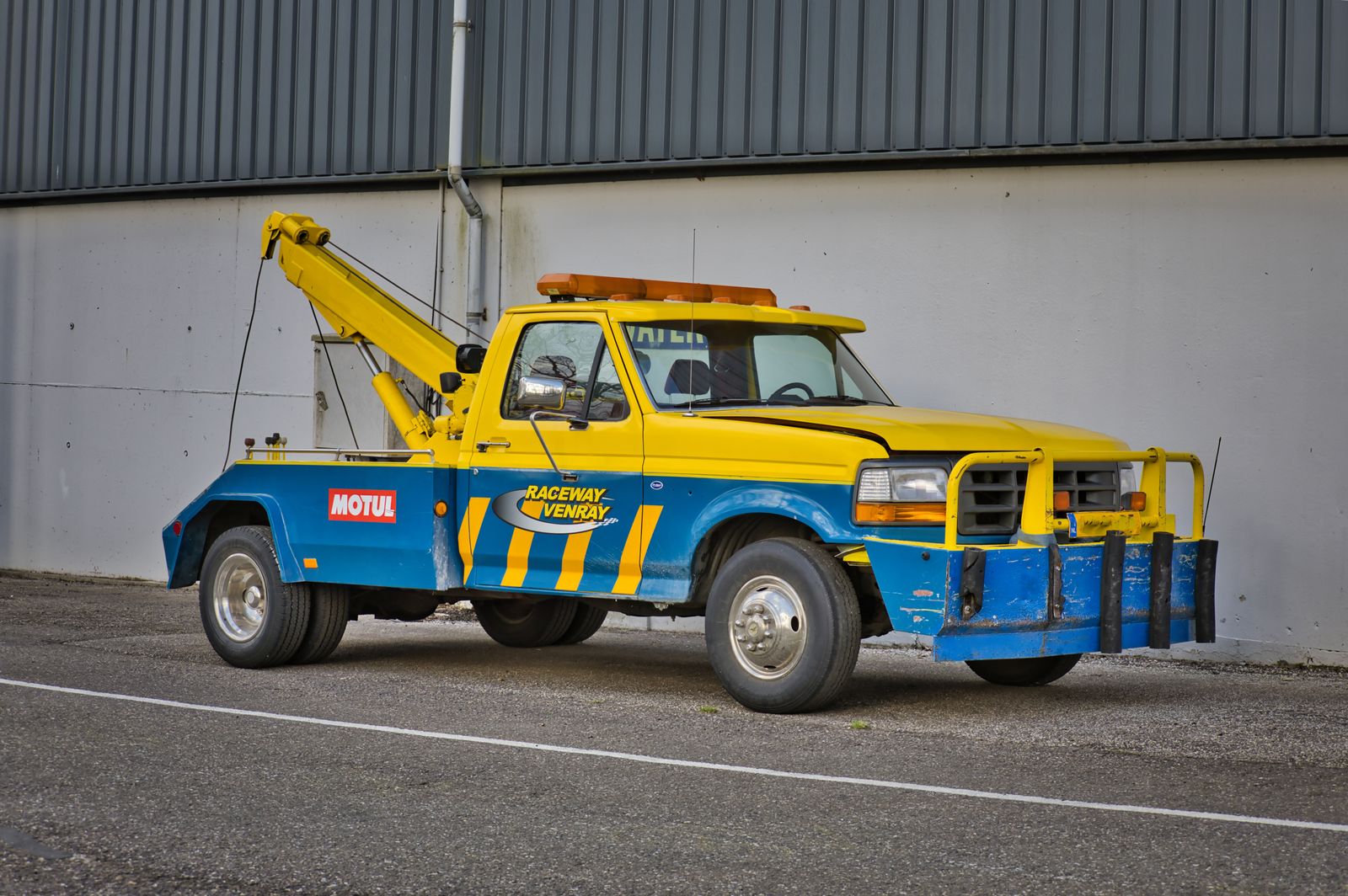
!Tow truck and roadside assistance — 24 Hour Towing Answering: Managing 2 A.M. Night Calls
Information Gathering: Avoiding the Midnight Dry Run
Answering the phone is only the first half of the battle. The second half is gathering the exact technical details required to prevent your driver from arriving on the scene with the wrong equipment. A successful night dispatch requires specific vehicle intelligence captured before the truck ever leaves the lot.
Your answering system—whether human or automated—must capture the vehicle's year, make, and model. More importantly, it must determine the drivetrain. An all-wheel-drive (AWD) SUV with a seized transmission cannot be dragged by a standard wrecker; it requires a flatbed or dollies. Dispatching a wrecker to an AWD call at 3 A.M. means the driver has to return to the yard, swap trucks, and drive back, doubling the fuel cost and frustrating the customer.
Furthermore, the answering protocol must assess the condition of the vehicle's keys. Are the keys with the vehicle? Are they locked inside? Is the steering column locked? Your dispatch logic must handle these variables automatically.
> Sending the wrong truck to a highway breakdown at 3 A.M. destroys your profit margin on fuel and lost time.
Capturing the Exact Location Over the Phone
The most notoriously difficult aspect of 24 hour towing answering is pinning down the caller's location. Stranded motorists rarely know their exact address. They know they are "somewhere on Interstate 95 past the stadium" or "near the exit with the Wendy's." Sending a driver out based on vague landmarks wastes time and creates dangerous roadside situations.
Drop-pin dispatching is the process of sending a text message containing a map link to a caller so they can share their exact GPS coordinates directly with your driver. This eliminates the guesswork of mile markers and cross streets.
If you are using a live operator or an automated system, the protocol must focus heavily on location triangulation. Asking for the last exit passed, the direction of travel (Northbound vs. Southbound), and any visible mile markers is mandatory.
> Accurate location capture prevents drivers from burning expensive diesel driving up and down the interstate searching for a breakdown.
Rotating Driver Dispatch Without Waking the Owner
Most small towing companies begin by routing all night calls directly to the owner's cell phone. This works for the first year, but it inevitably leads to profound operational fatigue. To scale, you must implement a rotating night schedule for your drivers.
Call cascading is a phone system feature that rings a primary number first, and if left unanswered, automatically forwards the call to a sequence of backup numbers. By implementing call cascading, your 24 hour towing answering system can rotate between drivers based on the day of the week.
For example, the dispatch line might route directly to Driver A on Monday and Tuesday nights. If Driver A is already on a call or asleep, the system cascades the call to Driver B. If Driver B fails to answer, the system finally routes the call to the owner as a last resort. This structure protects the owner's sleep schedule while ensuring no high-margin emergency call is ever dropped.
> A sustainable night operation relies on automated call routing to protect the owner from burnout while keeping the fleet active.
Live Operators vs. AI Receptionists
When standardizing your after-hours response, you generally choose between a traditional live answering service and an AI receptionist. Both have distinct operational advantages and limitations in the towing context.
Traditional answering services provide a human voice, which can be comforting to a distressed driver. However, live operators in generic call centers are often unfamiliar with towing terminology. They might not understand the difference between a winch-out and a standard tow, or they might fail to ask if a vehicle is lowered or modified. Additionally, live call centers typically charge by the minute, meaning a long, confusing conversation with a lost driver eats into your job profit.
An AI receptionist, by contrast, answers on the first ring, every single time, regardless of call volume. It can be explicitly trained on your exact equipment fleet, pricing parameters, and required dispatch questions. It never forgets to ask if the car is all-wheel drive, and it instantly texts the transcription and call details to your on-call driver.
Answering Solutions Comparison
| Feature | Traditional Answering Service | AI Receptionist | Direct to Owner |
| :--- | :--- | :--- | :--- |
| Speed to Answer | Variable (often placed on hold) | Instant (First ring) | Variable (sleep dependent) |
| Consistency | Operator dependent | 100% adherence to training | High, but leads to burnout |
| Concurrent Calls | Subject to staff availability | Infinite | Limited to one line |
| Data Capture | Prone to human error | Flawless transcription | Relies on tired memory |
> Modern AI dispatch tools follow your intake script flawlessly, ensuring you never dispatch a wrecker when a flatbed is required.
If you want to explore the broader landscape of automation and call handling, check out our extensive resources on Missed Calls & AI Receptionists.
Visibility: Making the Phone Ring in the First Place
Having a flawless 24 hour towing answering system is irrelevant if your phone never rings. Nighttime visibility on Google is heavily dependent on your Google Business Profile hours and your website's technical health. When a motorist searches "towing near me" at 3 A.M., Google filters the results to prioritize businesses that are explicitly listed as open 24 hours a day.
If your Google listing is suppressed or improperly configured—a frequent issue we diagnose when determining why businesses don't show up on Google in Cullman—you will never get the opportunity to answer the call. Furthermore, if a tourist's rental car breaks down while visiting Miami Beach, they have zero loyalty to local brands; they simply dial the largest, most trustworthy phone number on their glowing screen.
Your website must clearly state your 24-hour availability above the fold, featuring a click-to-call button that functions instantly on mobile devices. Stranded drivers do not read "About Us" pages; they look for a phone icon and a promise that a truck is available right now.
> A flawless answering system only generates revenue if your local SEO strategy accurately broadcasts your 24-hour availability to stranded searchers.
Setting Up Your Night Shift Playbook
Auditing your own night operations is the fastest way to find leaked revenue. Set an alarm for 2 A.M. tonight, walk out to your driveway, and call your own business line. Count the rings. Listen to the voicemail prompt. Ask yourself: if you were stranded on the side of a highway in the rain, would this experience convince you that help was on the way?
At Digital Advantage Studios, we specialize in building the infrastructure local services rely on to capture every lead. If you are ready to upgrade your online presence, you can get a free site preview generated in about 60 seconds and live today.
Our pricing is straightforward and built for service businesses. Our Launch plan is $99/mo with no setup fee, providing a custom domain (live within 24–48 hours once DNS propagates), SEO setup, and lead capture. If you want to integrate intelligent call handling, our Growth plan at $449/mo (plus a $299 one-time setup) includes our AI receptionist to handle those midnight dispatch questions. Alternatively, the AI receptionist is available as a standalone product for $199/mo, or as an add-on to the Launch plan for $79/mo. Cancel anytime, no long-term contracts.
Stop letting your most profitable towing jobs roll to voicemail. Secure your night shift, protect your drivers, and capture the margin.