Appliance Repair Scheduling Without a Dispatcher
· Digital Advantage Studios LLC, Miami Beach, FL
Short answer: Appliance repair scheduling without a dispatcher works by routing calls to an AI system that captures the customer's issue, appliance brand, model number, and address. It then offers available arrival windows based on your calendar and logs the details for parts pre-checking before you ever touch the call.
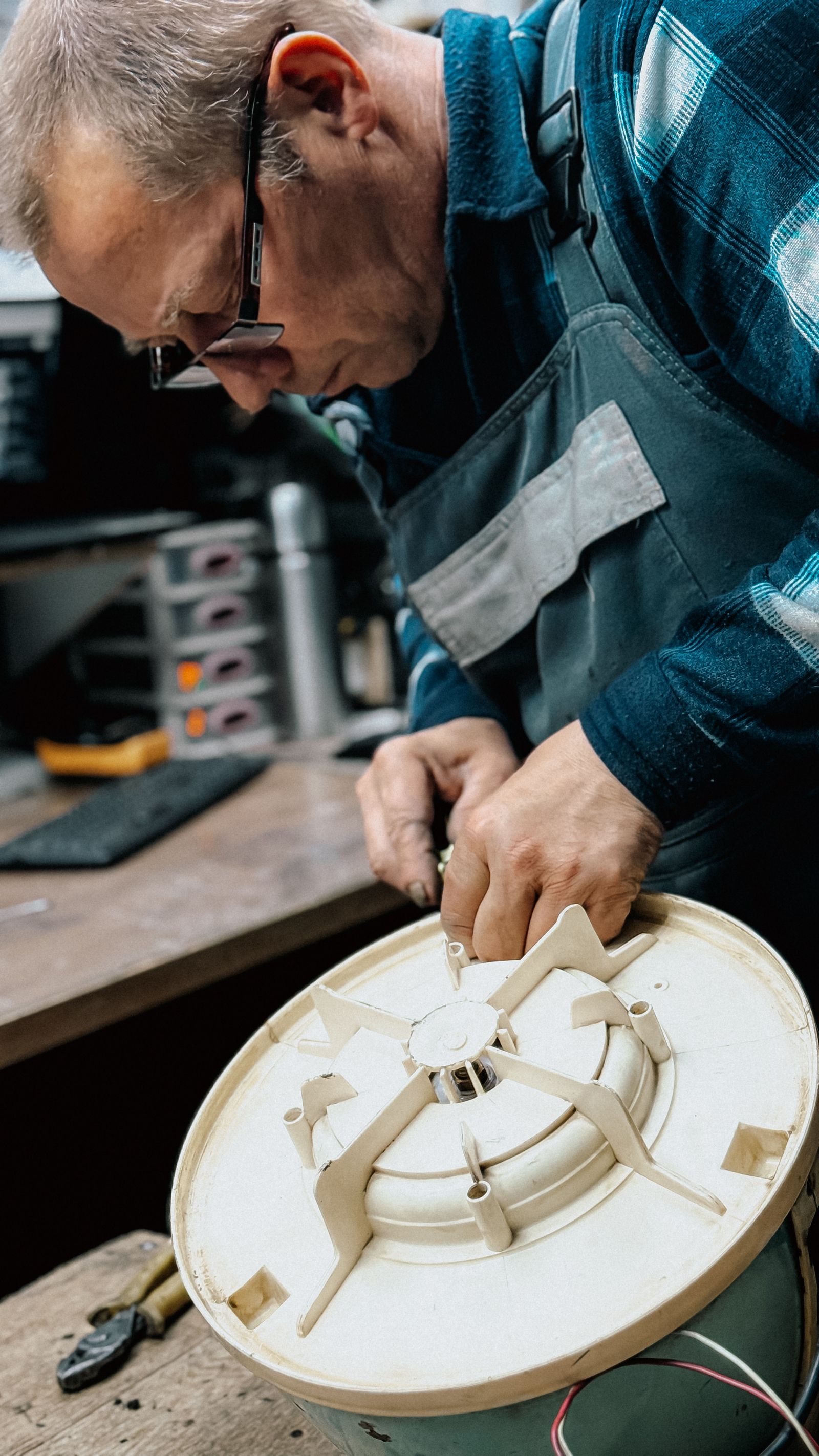
Appliance repair scheduling without a full-time dispatcher requires an automated system that handles triage. By routing calls to an AI assistant, you can immediately capture the appliance brand, model number, symptom, and customer address. The system then offers available arrival windows based on your calendar and logs the data so you can pre-check parts before returning the call.
Why Traditional Appliance Repair Scheduling Breaks Down
Customers call an appliance repair business when they are in a state of mild panic. Food is melting in a warm freezer, a washing machine is locked full of wet clothes, or a dishwasher is leaking across a hardwood floor. When that call comes in, they expect an immediate answer.
If you are a solo technician or operating a small team, you are likely elbow-deep in a dryer drum when the phone rings. You cannot comfortably wipe the grease off your hands, grab your phone, and take down an address. When the call goes to voicemail, the customer simply hangs up and calls the next shop on Google.
Call triage is the process of sorting incoming service requests based on urgency and required parts before dispatching a technician. Without a dedicated person handling triage, your schedule becomes chaotic. You end up arriving at homes blindly, diagnosing an issue you could have spotted over the phone, and leaving to order a part that takes three days to arrive.
An unanswered appliance repair call is a lost job because customers with melting freezer food will not wait for a callback.
The Automated Data Collection Flow
To replace a human dispatcher, your automated system must gather specific information in a specific order. If an AI receptionist just takes a name and number, it operates no differently than a basic voicemail box.
The goal of intelligent appliance repair scheduling is to gather actionable intelligence. When a system is properly configured, it executes a strict workflow before alerting you to the call.
| Data Point Required | Why It Matters for Appliance Repair | How Automation Captures It |
| :--- | :--- | :--- |
| Appliance Type & Brand | Determines if you service this specific machine | Asks directly: "Is this for a refrigerator, washer, or another appliance? And what is the brand?" |
| Symptom Description | Estimates labor time and points to likely faulty parts | Records verbatim audio and transcribes the text |
| Model Number | Vital for accurate parts lookup and pricing | Sends an automated SMS guide on where to locate the model sticker |
| Customer Address | Determines route efficiency and service area bounds | Collects street address and verifies it against your zip code list |
| Arrival Window | Sets customer expectation and secures the booking | Reads available blocks from your connected service calendar |
By the time you receive the notification, you are looking at a complete dossier of the job. You know it is a Samsung French Door refrigerator with a warm fresh food section and a freezing ice maker, and you have the exact model number ready for your parts distributor portal.
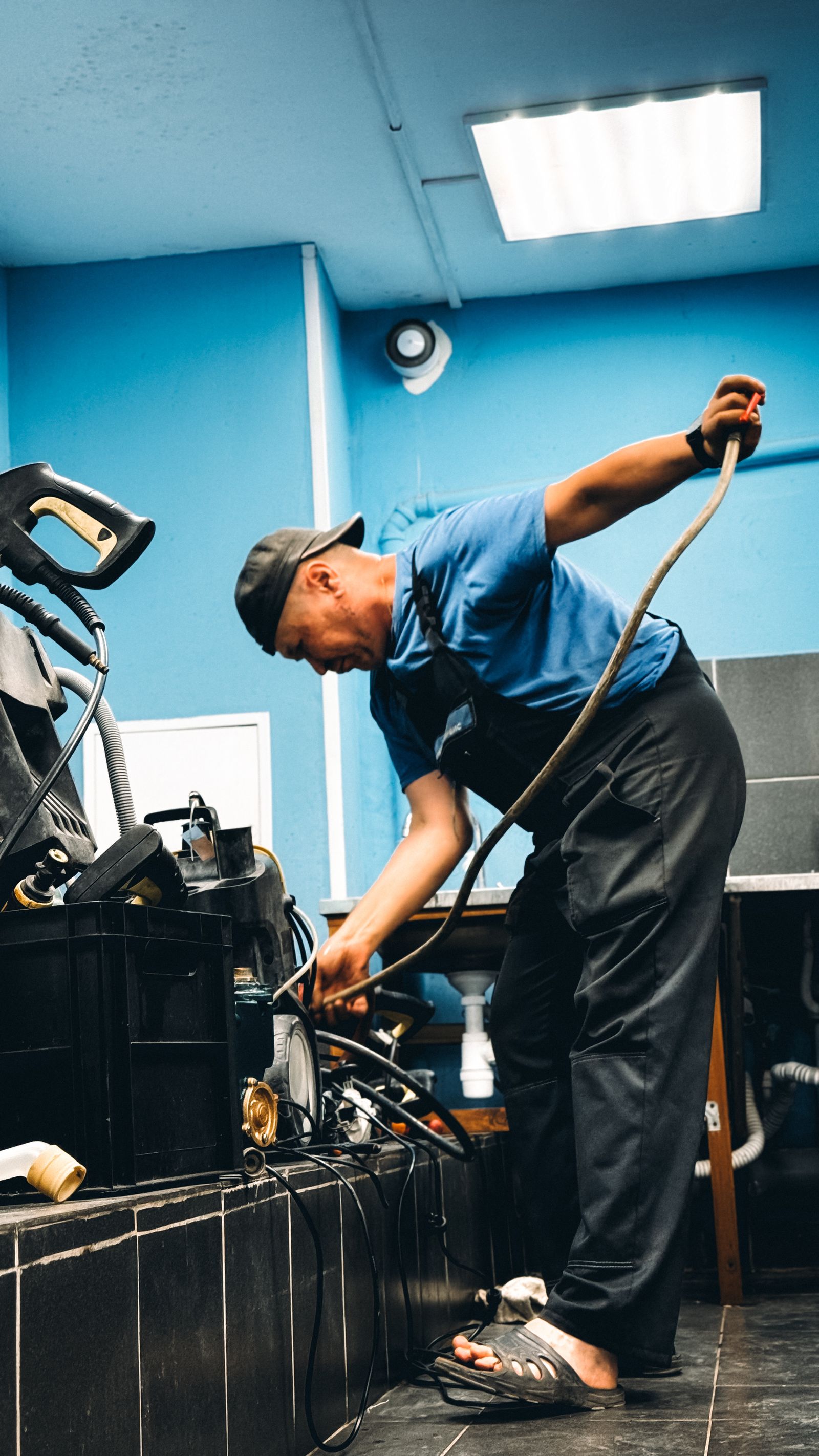
!Appliance repair technician at work — Appliance Repair Scheduling Without a Dispatcher
Capturing the Model Number Without a Live Dispatcher
Getting a model number from a homeowner is notoriously difficult. Customers rarely know the difference between a serial number and a model number, and they rarely know where to look. A live human dispatcher can easily spend ten minutes on the phone explaining that the sticker on a front-load washer is usually inside the door frame.
Automated systems handle this gracefully by moving the conversation from voice to text. When the AI receptionist asks for the model number and the customer does not know it, the system can offer to send an SMS text message with instructions.
A parts pre-check is the verification of component availability and pricing before a technician is dispatched to a customer's home. You cannot perform a parts pre-check without a model number. When the customer receives the text, they can take their time finding the sticker, reply with the number or a photo, and the system logs it straight into your lead capture dashboard.
Capturing the model number before you speak to the customer turns unprofitable diagnostic trips into high-margin, single-visit repairs.
Setting Arrival Windows and Protecting Your Route
You cannot promise a customer you will arrive exactly at 2:00 P.M. If your morning compressor swap takes two hours longer than expected, your entire afternoon schedule collapses.
A routing buffer is the extra time built into a service schedule to account for traffic, complex repairs, or missing parts. Effective appliance repair scheduling relies on broad arrival windows—typically morning (8 A.M. to 12 P.M.) and afternoon (12 P.M. to 4 P.M.) blocks.
When you use an AI receptionist connected to your calendar, the system understands your routing buffers. It will only offer blocks that are genuinely available. If a customer demands a more precise time, the AI is programmed to explain that technicians provide a thirty-minute heads-up call when they are en route.
Much like how plumbing company website design Detroit emphasizes urgent scheduling options for burst pipes, your appliance scheduling system must prioritize immediate emergency triage while setting realistic arrival times.
Offering block arrival windows instead of precise appointment times protects your schedule from inevitable repair delays.
Evaluating Traditional Answering Services vs. AI Solutions
Business owners looking to step back from the phone usually consider two options: a traditional call center or an AI-powered automated system. Both have distinct advantages depending on how you run your routes.
Traditional answering services are excellent if you want a human voice offering empathy to every caller. If a customer is furious about a leaking washing machine, a human operator can listen and apologize. However, traditional centers typically rely on generic scripts. They are rarely trained to walk a caller through the complex process of locating a specific LG refrigerator model number, and they charge by the minute.
If you operate a local fleet and are researching an answering service for small business Miami Beach, you must decide if you want a friendly human taking a basic message or an automated system capturing precise technical data. AI systems charge a flat monthly rate and follow strict technical workflows without getting flustered by a rambling caller.
While human call centers offer excellent empathy, AI receptionists excel at following strict technical workflows like gathering appliance model numbers.
The Impact of Missed Calls on Your Local SEO
There is a hidden cost to missing calls while you are on a job: your local search visibility suffers.
When a customer calls and reaches your voicemail, they hang up and call a competitor. That competitor books the job, fixes the stove, and asks the customer for a Google review. Over time, the competitor accumulates hundreds of five-star reviews while your profile remains stagnant.
When a local repair shop owner asks why isn't my business showing up on Google Cullman, the root cause is frequently a lack of recent, positive reviews stemming from missed phone calls. Google rewards businesses that actively serve customers and generate consistent feedback. By ensuring every call is answered and scheduled immediately, you secure the jobs that fuel your online reputation.
To explore more strategies on how automated answering protects your bottom line and boosts your local search ranking, read our complete guide to Missed Calls & AI Receptionists.
Consistently answering calls and booking jobs is the fastest way to build the Google reviews necessary for local SEO dominance.
Integrating the Automated Dispatcher Into Your Daily Routine
Adopting an automated scheduling system changes how you structure your workday. Instead of constantly interrupting your current repair to answer the phone, you check your dashboard between stops.
Assume you are finishing a dishwasher repair. You pack your tools, sit in your van, and pull out your phone. You see two new notifications from your lead capture system with instant text and email alerts.
The first is for a Whirlpool dryer not heating, complete with the model number. You open your parts supplier app, see the heating element is in stock locally, and note the price. You then call the customer back, confirm the arrival window the AI set, quote the diagnostic fee, and head to the parts house.
Automating your inbound calls frees you to focus on wrenching while the system fills your calendar.
Setting Up Your Appliance Repair Booking System
At Digital Advantage Studios, we build systems designed specifically for local service businesses that need to capture leads and schedule jobs without spending all day on the phone.
If you need a professional web presence, our Launch plan is $99/mo with no setup fee. It includes a custom 1-page website live today—generated in about 60 seconds. A custom domain goes live within 24–48 hours once DNS propagates. The plan features lead capture with instant text and email alerts, local SEO setup, and hosting. There are no long-term contracts; you can cancel anytime.
If you want to automate your scheduling, our standalone AI receptionist product tiers are available as a Standalone for $199/mo, or as an Add-on to the Launch plan for $79/mo. The AI handles the triage, model number capture, and arrival window scheduling so you can focus on the repairs.
Stop losing jobs to voicemail. Review our pricing to see how our packages compare, or get a free site preview to see your new custom website generated in 60 seconds.