Auto Glass Missed Calls: Answering While on a Windshield
· Digital Advantage Studios LLC, Miami Beach, FL
Short answer: Handling auto glass missed calls requires a system that engages customers while your hands are busy. By deploying an AI receptionist or automated text reply, you can immediately capture the vehicle's year, make, model, and damage type. This keeps frantic drivers from dialing the next shop and secures the job until you finish working.
Stop Losing Jobs to the Next Google Result
Auto glass missed calls happen because you cannot safely answer a ringing phone with resin on your hands. To stop losing jobs to the next shop on Google, implement a capture-and-callback loop: an immediate automated text or AI receptionist that collects the vehicle's year, make, and model while you finish setting the windshield.
When you are working out of a mobile van, your phone is your lifeline. It brings in your revenue, coordinates your schedule, and connects you to parts suppliers. But the physical nature of mobile glass repair means you are constantly separated from that lifeline. You cannot press a phone to your ear while cutting out a shattered rear window or laying down a perfect bead of adhesive.
The Reality of Working with Resin on Your Hands
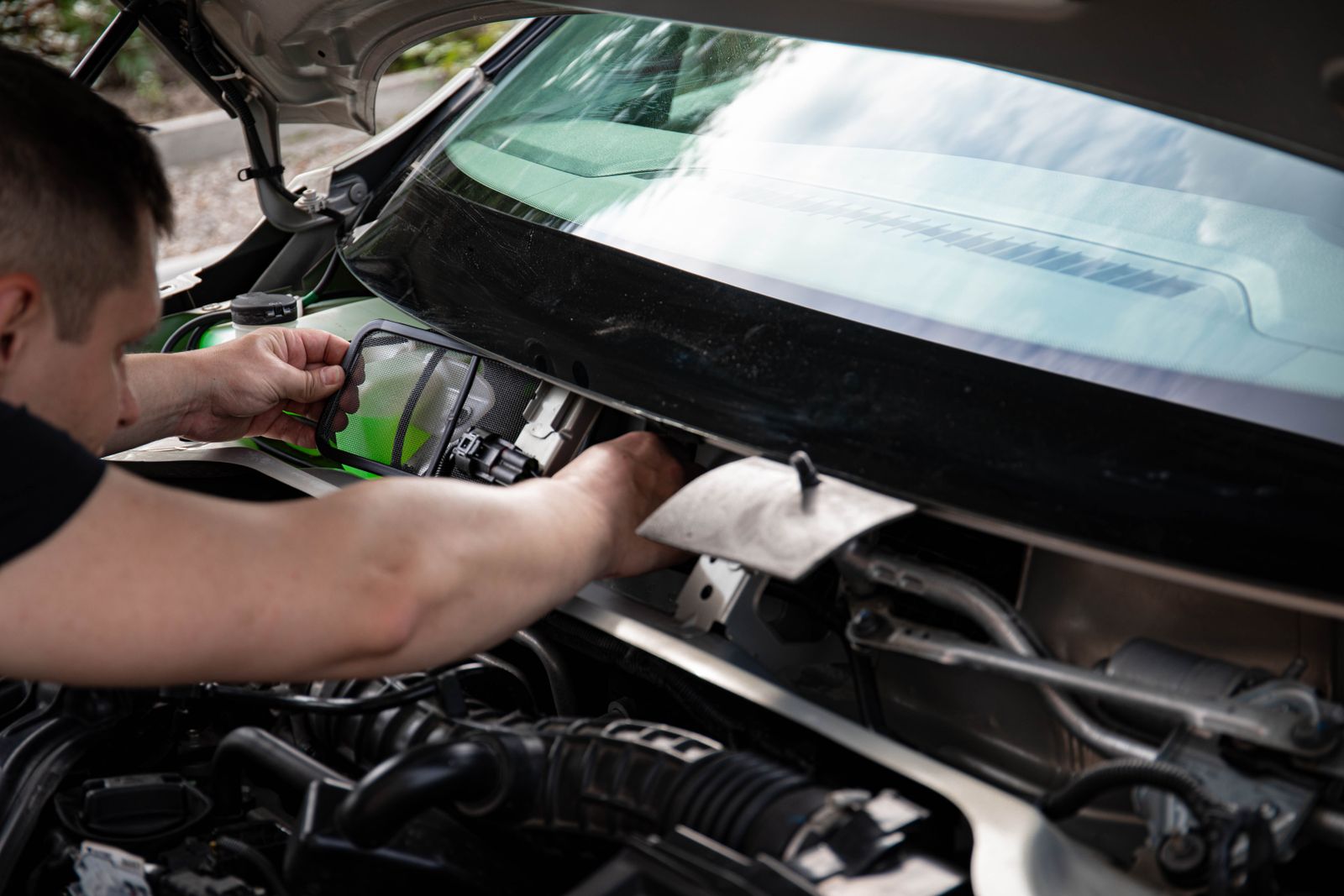
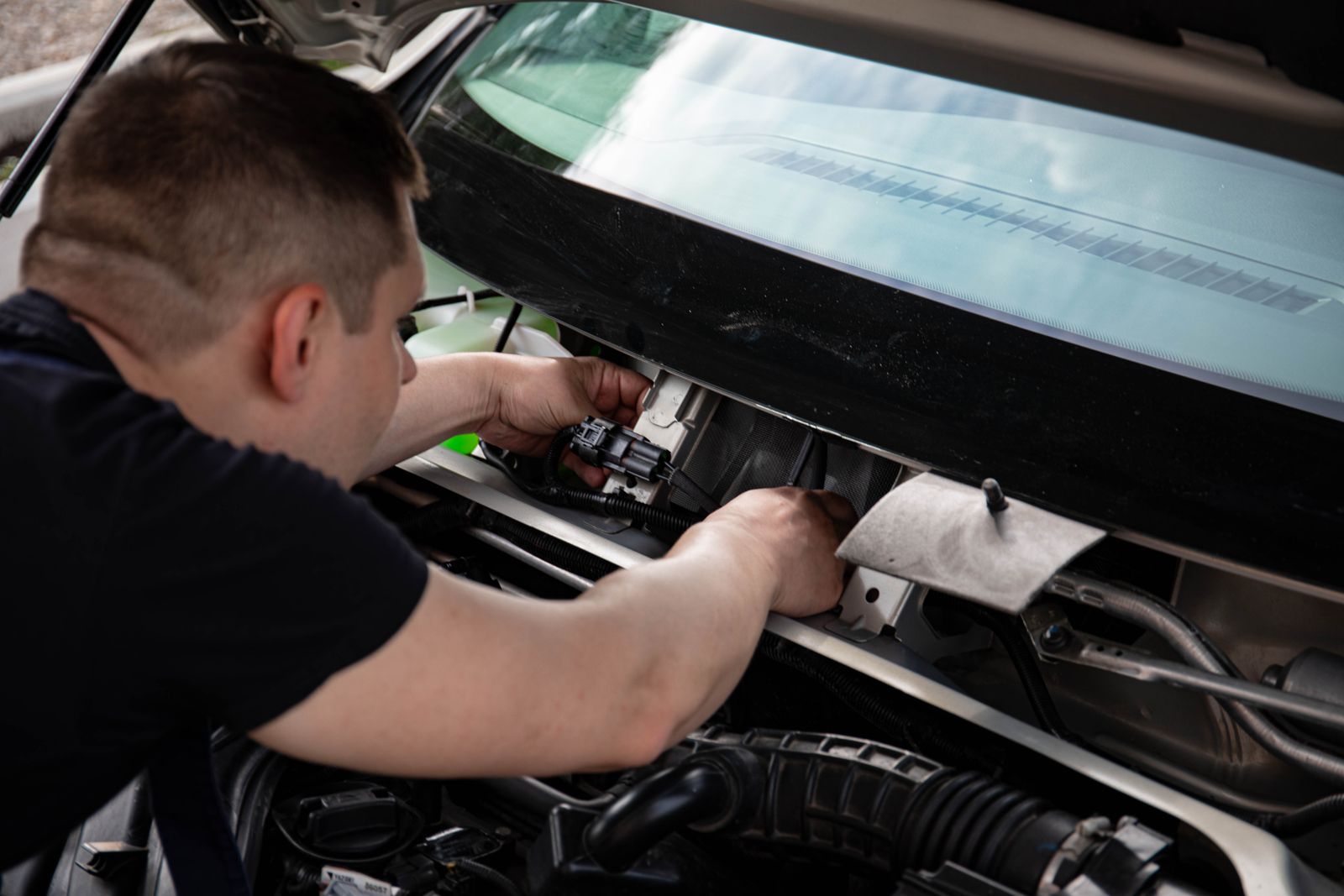
Windshield replacement is heavy, precise work. When you are balancing a heavy piece of glass over the hood of a car, you cannot reach into your pocket. When your hands are covered in black adhesive and nitrile gloves, you cannot swipe to unlock a touchscreen.
Urethane is the heavy-duty structural adhesive used to bond auto glass to a vehicle frame. Once you open a tube of urethane, the clock is ticking. You have a limited working time before it begins to cure. If your phone rings while you are applying it, you have to let the call go to voicemail. Stopping the application compromises the safety of the installation, creates a messy leak risk, and ruins your materials.
You cannot safely set a windshield with one hand and book a new client with the other.
Every mobile technician knows the frustration of listening to their phone ring from the dashboard while they are elbow-deep in a replacement. You know it is a potential customer. You know they are likely standing in a parking lot looking at a spiderweb crack in their glass. But you have to let it ring.
Why Auto Glass Missed Calls Go to the Next Shop
Customers looking for mobile auto glass repair have zero patience. They are not shopping for a luxury service; they are dealing with an emergency. Their car is damaged. It might be raining. They might be terrified of getting pulled over for a shattered windshield. They need a fix, and they need it today or tomorrow.
When a customer dials your number and gets voicemail, they almost never leave a message. Instead, they hang up, go back to their search results, and dial the next local company on the list. They will keep dialing until a human or an intelligent system responds.
Whether you operate in a major metro or a smaller market like Cullman, your local visibility only pays off if you actually capture the lead. Ranking at the top of local maps is useless if you let those calls bounce to your competitors because you were busy on a job site. Assume an average windshield replacement ticket is $350. If you miss just two viable calls a week because you were working, you are leaving $700 on the table every week.
Relying on traditional voicemail is the fastest way to send a warm lead directly to your closest competitor.
!Auto glass and windshield service — Auto Glass Missed Calls: Answering While on a Windshield
The Capture-and-Callback Loop Explained
You cannot change the fact that you will miss calls. What you can change is what happens in the sixty seconds after the phone stops ringing.
A capture-and-callback loop is an automated sequence that instantly messages an unanswered caller to gather job details, buying you time to reply when you are free.
Here is how a basic text-based loop works:
1. A customer calls your business number.
2. You are busy laying a bead of urethane, so you let it ring.
3. The call drops. Immediately, your system fires a text message to the caller: "Hi, this is [Your Shop Name]. We are on a mobile job right now. What year, make, and model do you need glass for?"
4. The customer sees the text immediately. Because you have engaged them and asked a specific question, they stop dialing other shops and reply: "2019 Honda Accord, front windshield."
5. You finish setting your glass, wipe your hands, look at your phone, and reply with a quote.
An immediate text reply turns a frustrated caller into a secured lead before they return to the search results.
The Four Intake Questions You Must Collect
To effectively quote an auto glass job and check parts availability, you need specific details. Your automated capture system should immediately ask for the information you need to build a quote. Do not waste the automated message on a generic "We will call you back." Ask for the specs.
Configure your AI or text automation to collect these four pieces of information:
- Year, Make, and Model: The fundamental baseline for quoting any auto part.
- Which Piece of Glass: Is it the front windshield, a rear window, a driver-side door glass, or a quarter panel? Each piece requires completely different parts, labor times, and pricing.
- Specific Features: Does the windshield have a rain sensor for the wipers? Does it have a lane departure camera? Does it have a heated wiper park area?
- Payment Type: Is the customer paying cash out of pocket, or are they trying to file an insurance claim?
ADAS is the network of Advanced Driver Assistance Systems (like lane departure cameras) mounted to the windshield that must be recalibrated after a replacement. If your system captures that the vehicle is a modern SUV with ADAS, you instantly know the job requires recalibration equipment, which changes your quote significantly.
Using an AI Receptionist for Auto Glass
While a simple automated text is better than voicemail, an AI receptionist is the ultimate tool for handling auto glass missed calls. Instead of just firing off a static text, an AI receptionist actually answers the phone or carries on a dynamic two-way text conversation. It speaks to the customer, asks the specific intake questions, and routes the details to you.
When a mobile tech navigating traffic in Miami Beach misses a call, a smart answering system takes over completely. The customer speaks to the AI, which is trained specifically on your auto glass business. The AI asks about the year, make, and model. It asks if they have insurance. It assures the customer that a technician will contact them with a quote shortly.
To explore this technology further, browse our complete guide to Missed Calls & AI Receptionists.
If you prefer a voice solution, we offer standalone AI receptionist product tiers. The Standalone AI receptionist is $199/mo, or you can bolt it on as an Add-on to the Launch plan for $79/mo. This system acts as your full-time dispatcher, ensuring every frantic driver gets an immediate, professional response while you keep your hands on the glass.
An AI receptionist secures the booking by having a natural conversation while you remain focused on a safe installation.
Comparing Call Handling Methods
Every time you miss a call, you are forcing the customer into one of several paths. Review how different methods impact your lead capture rate.
| Handling Method | Customer Experience | Lead Capture Rate | Tech Distraction Level |
| :--- | :--- | :--- | :--- |
| Voicemail | Usually hangs up immediately. | Very Low | None |
| Human Call Center | Speaks to a human, but gets generic answers. | Medium | None |
| SMS Auto-Reply | Quick engagement, but requires the user to text back. | High | Low |
| AI Receptionist | Natural conversation, instant intake of vehicle specs. | Very High | None |
Dispatching, Routing, and Expanding Your Service Area
Running a mobile service means your "office" is wherever your van is parked. You do not have a front desk to manage leads. Every lead needs to be routed directly to your mobile device in a format you can scan in three seconds.
Just as a mobile detailing crew working in Detroit cannot stop polishing a ceramic coat to answer pricing questions, you cannot stop applying primer to answer dispatch questions. By combining a capture-and-callback loop with instant notifications, you create a silent dispatch system.
When the AI receptionist or text system captures a lead, it immediately triggers an alert. You receive an instant text and email with the vehicle details, the damage, and the location. When you finish your current job, you check your phone. You see the lead, you check your glass supplier app for parts availability, and you call the customer back with a firm price and an ETA. You have effectively cloned yourself, acting as both the technician and the dispatcher without dropping the ball on either role.
This setup allows you to expand your service area confidently. You are no longer afraid of a marketing campaign generating "too many calls" while you are busy. You can handle the influx because the system triages the leads for you.
Stop Bleeding Leads: Your Next Step
You are losing money every time your phone rings and you have a suction cup in your hand. You do not need to hire a dispatcher, and you do not need to risk a bad installation by answering your phone on the job. You just need a system that answers when you cannot.
At Digital Advantage Studios, we build tools that stop the bleeding. Our Launch plan is $99/mo with no setup fee. It includes a custom 1-page website live today—generated in about 60 seconds using our proprietary app system. A custom domain is included and goes live within 24–48 hours once DNS propagates.
The Launch plan includes a 24/7 AI chatbot trained on your business, lead capture with instant text and email alerts, and local SEO setup (LocalBusiness schema, sitemap, and Google indexing). You also get a monthly performance report, a Google reviews widget with a QR code, plus hosting, SSL, and daily backups. There are no long-term contracts, and you can cancel anytime. If you want voice answering, add the AI receptionist for just $79/mo.
Stop letting jobs slip away while you work. Check out our pricing and start capturing every lead today.